
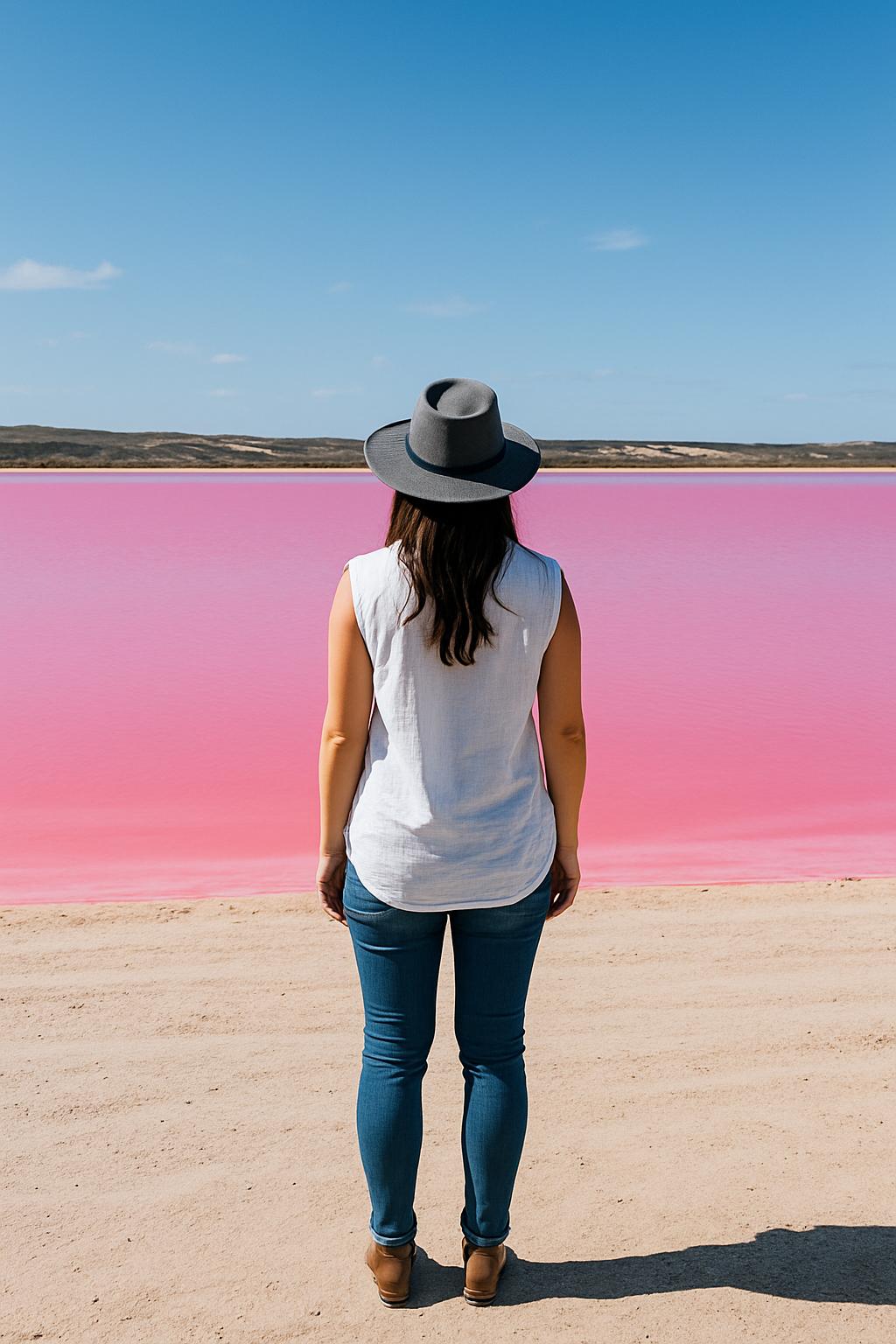
If you’ve dreamt of flying over a neon-pink oval tucked between emerald woodland and the cobalt Southern Ocean, you probably had Lake Hillier on your bucket list. For years, it was the poster-child for “pink lakes” in Western Australia—bubble-gum bright in every drone reel, an instant jaw-drop from the air.
But when you finally make it to Esperance, you might hear something deflating: Lake Hillier isn’t pink right now. In fact, in recent years its colour has faded towards silvery blue and slate. And the “Pink Lake” just outside town? Also… not pink. Cue the traveller blues.
Take a beat. This isn’t a “cancel your trip” moment—it’s a chance to understand the living, breathing story behind Esperance’s lakes: why they were pink in the first place, what changed, what locals think, and how to visit without chasing a mirage. Let’s pull back the Instagram filter and get into the science, the hydrology, and the truth that makes these places even more fascinating.

Short version (so you don’t skim in the car park)
- Lake Hillier did lose its famous pink after a very wet year diluted its hypersaline brine. Scientists and park managers say colour should gradually return as salinity rebuilds—on nature’s timeline.
- Esperance’s “Pink Lake” (officially Lake Spencer) stopped turning pink years ago because human changes reduced its salinity—think salt harvesting and altered water flows from roads and a rail line. There’s a plan on paper to re-salinate it by pumping brine from nearby Lake Warden, but it’s not a quick fix. ABCesperance.wa.gov.au
- Pink colour is a microbial magic trick—led by salt-loving algae (Dunaliella salina) and bacteria/archaea such as Salinibacter ruber and Halobacteriaceae, which make rosy pigments when life gets harsh (ultra-salty, bright, nutrient-poor). BioMed CentralLive Science
- You can still have an epic Esperance trip—think white-sand beaches, granite peaks, island cruises, and scenic flights that show a whole archipelago, whether the lakes are pink or pewter. Access to Hillier itself is tightly managed; most people see it by air. Western Australia
If you’re here for the full story (and the traveller’s perspective), read on.


Why Lake Hillier isn’t pink right now
For decades, Lake Hillier had a reputation for being reliably pink. It’s a tiny, hypersaline lake on remote Middle Island in the Recherche Archipelago—so salty (around 28% in some measurements) that only extremophile microbes thrive. Under the right conditions, those microbes make pigments—carotenoids and other rosy molecules—that turn the entire lake bubble-gum pink. BioMed Central
Then came a very wet year. Heavy rainfall in 2022 diluted the lake’s brine. Color-making microbes don’t disappear, but they dial down the pigment when the soup isn’t salty or stressful enough. The result: the lake shifted to a pale, bluish-grey tone. By 2025, Australian park officials and local operators were still telling visitors not to expect the old electric pink; the colour should return gradually as evaporation outpaces freshwater inputs and salinity cranks back up, but no one can (or should) put a date on nature.
Important nuance: Hillier’s pinkness has always varied with seasons, light, and angle of view. Even in its “good years,” it could look strong pink from above, softer from the sand, brighter in summer after evaporation, and subdued under cloud. But the recent dilution pushed it below the threshold where those photogenic pigments dominate the scene. BioMed Central
Why “Pink Lake” near Esperance isn’t pink anymore (and why that’s different to Hillier)
Here’s the twist most travellers don’t know: Esperance has more than one “pink lake.” The famous roadside one ten minutes from town is officially Lake Spencer, colloquially Pink Lake—but it hasn’t put on a show in years.
What changed? Unlike Hillier (on a protected island), Lake Spencer sits inside a connected wetland system next to a town and transport corridors. Over more than a century, salt was harvested from the Pink Lake system; later, the South Coast Highway and a railway altered natural flows. Lower salinity plus extra nutrients is basically a vibe killer for pink-making microbes. The result: blue/white water and salt flats instead of flamingo. ABCWikipedia
Local government commissioned a study and even backed a trial plan to pump excess brine from nearby Lake Warden back into Pink Lake—a “one lake has too much salt; one has too little” idea. It’s clever and could shorten a natural recovery that might otherwise take centuries, but it’s a complex, staged project with funding, engineering, and environmental considerations. The upshot for visitors: don’t arrive expecting roadside pink unless you’ve seen very current local updates saying otherwise. ABCesperance.wa.gov.au

The science of pink: microbes, stress, and a dash of sunlight
The pink phenomenon is biological, not chemical dye. Multiple lines of research show it’s a consortium—more than one organism plays a part:
- Algae like Dunaliella salina ramp up beta-carotene (yes, the same pigment family as carrots) in ultra-salty, bright, nutrient-poor water—think sunscreen and stress shield built in.
- Halophilic bacteria and archaea (e.g., Salinibacter and Halorubrum) contribute red to orange pigments (carotenoids, bacterioruberin) and can tint both the brine and salt crusts.
- The exact pink you see depends on salinity, temperature, light, phosphate scarcity, and the relative abundance of these organisms. When the stressors ease (say, after heavy rain), pigments fade. When they intensify (after evaporation), pink rebounds. BioMed CentralLive Science
A 2022 metagenomic study specifically on Lake Hillier confirmed a diverse cocktail of pigment-producers—Dunaliella, Salinibacter, Halobacillus, Psychroflexus, Halorubrum, and others—plus a raft of genes tied to pigment pathways. Translation: there isn’t a single “pink microbe switch”; it’s a whole team effort, tuned by environmental conditions. BioMed Central
“So… is Esperance still worth it?” Travellers’ thoughts from the ground (and the air)
Talk to travellers in Esperance and you’ll hear versions of this:
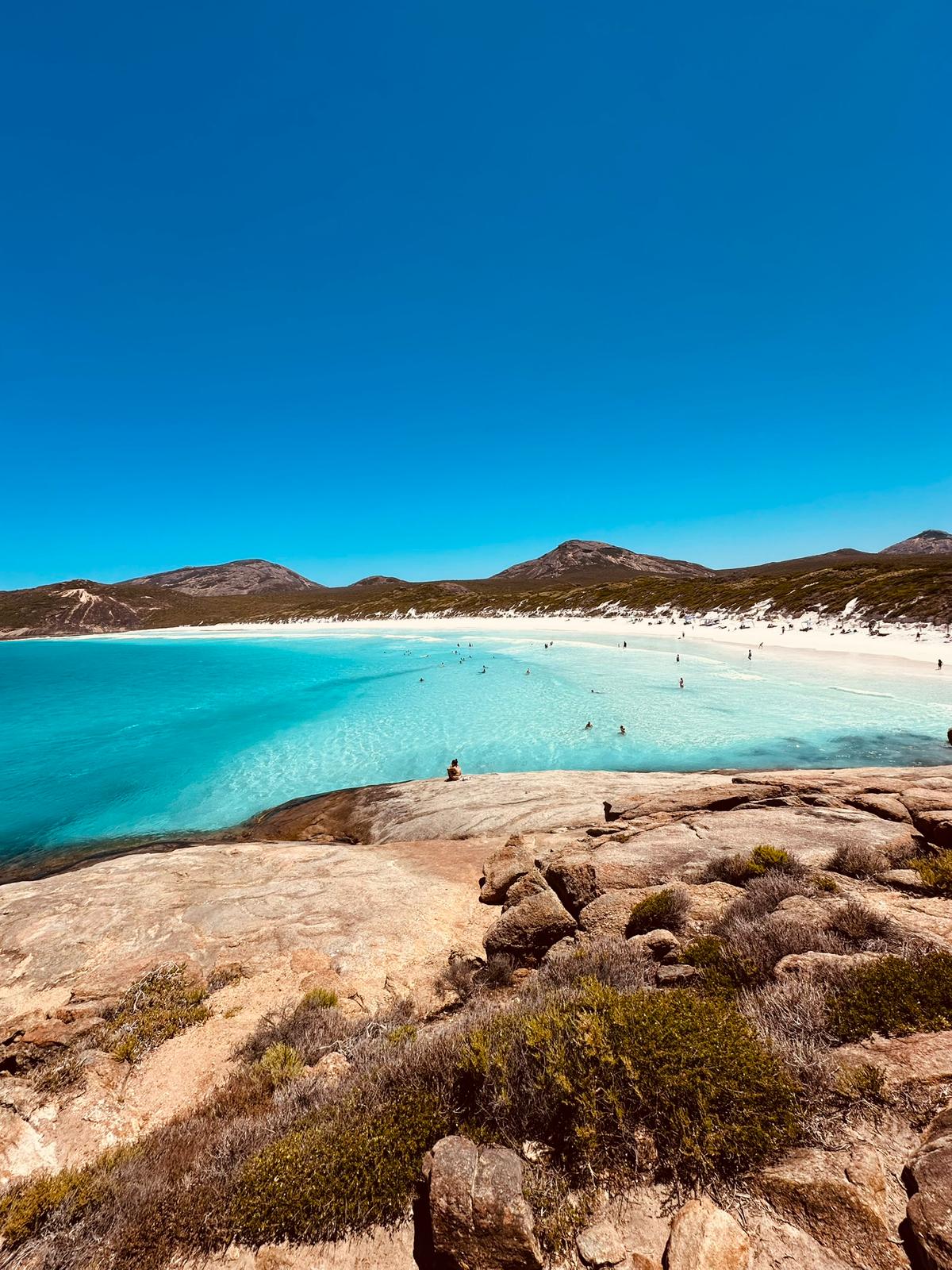
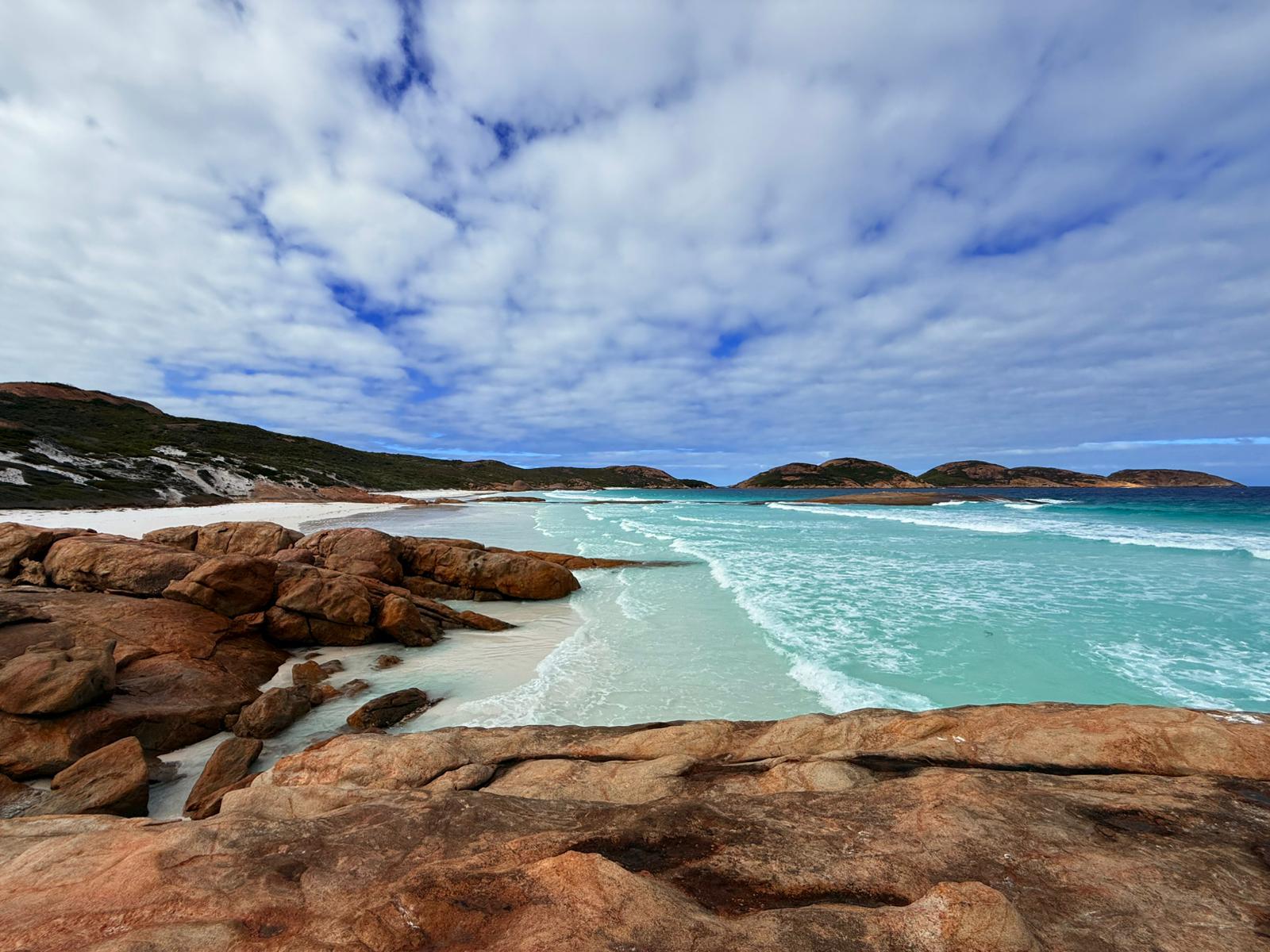
- “I came for a pink lake; I stayed for the beaches.” The shock-white sand of Lucky Bay and Hellfire Bay, turquoise water, and often-friendly kangaroos have an almost otherworldly glow even on a cloudy day.
- “The flight over the islands was the highlight—even without neon pink.” Scenic flights trace the scalloped coastline, the chain of granite islands, and Middle Island itself. Seeing Hillier’s shape and setting next to a sapphire ocean still punches above its weight, colour or not. (You can’t just wander onto Middle Island; access is controlled and most visitors go by air.) Western Australia
- “The story behind the lakes made the place feel more alive.” Hearing how hydrology, rainfall years, and tiny microbes write and rewrite the colour of a whole lake changes the way you watch the light on the salt, even when it’s silver.
Locals, too, will tell you the truth is better than the myth. The “Pink Lake” branding has been a headache for decades—a tourism identity crisis with disappointed drive-by visitors and confused signage. Many would prefer clear, honest messaging: Hillier is offshore and variable; Lake Spencer isn’t pink now; the region is still incredible. ABC


The truth about Esperance’s pink lakes (plural)
Let’s sort the names and realities you’ll see on maps and brochures:
- Lake Hillier (Middle Island, offshore):
- Current colour: Recently muted/blue-grey after a wet year; expected to regain colour naturally as salinity rebuilds.
- Access: Largely by scenic flight; limited, licensed ground access only with operators; strict biosecurity to protect a fragile island ecosystem.
- Why it turns pink: A microbial community in hypersaline brine; pigments intensify with evaporation and stress. Western AustraliaBioMed Central
- Pink Lake / Lake Spencer (roadside near town):
- Current colour: Not pink (blue/white salt pans).
- Why it lost pink: Reduced salinity from historic salt harvesting and altered water flows from transport infrastructure; complex catchment changes over time.
- What’s being explored: A brine-pumping concept from Lake Warden to restore salinity; a feasibility study and a council-supported trial plan exist, but it’s a long game. ABCesperance.wa.gov.auWikipedia
- Lake Warden and the wider wetland system:
- Hydrologically connected basins with salinity and nutrient levels that fluctuate seasonally and with land use. Managing one lake can affect another—hence the idea of redistributing salt. Technical reviews map these flows and the seasonal chemistry shifts that drive algal blooms or hypersaline phases. DBCA Library
Takeaway: Esperance does have pink-lake heritage, but the “pink on demand” picture is out of date. What you’ll see at any given time depends on rainfall, evaporation, and management decisions—with Hillier’s show now governed almost entirely by weather and physics offshore, and Lake Spencer’s by decades of on-shore change.
How pink lakes work (and un-work): a practical explainer
Think of a pink lake as a solar still—sunlight evaporates water and concentrates salt. As salt rises and nutrients drop, specialist microbes switch on pigment pathways (like carotenoid factories). The pigment both protects cells and, conveniently, dyes the water.
Now flip the variables:
- Add freshwater (big rain years) → salinity dips → microbes relax → pigment production eases → colour fades.
- Increase nutrients (runoff, disturbed catchments) → different microbes win → colour shifts (often to ochre) or disappears.
- Alter flows (roads/rails) or mine salt → long-term salinity regime changes → pink phases become rare or stop. BioMed CentralABCDBCA Library
That’s the Lake Hillier/Lake Spencer split in a nutshell: Hillier’s fade is weather-driven and reversible; Lake Spencer’s is human-driven and needs help. ABC

Visiting tips when you’re not chasing neon
1) Fly for the big picture. A scenic flight delivers context: chiselled bays, snow-white beaches, granite islands, and Middle Island sitting like an emerald lozenge in the deep blue. Even if Hillier’s muted, the contrast and shapes are spectacular—and you’ll understand the archipelago’s scale in a way the highway can’t. (Operators are upfront about current colours.) Goldfields Air Services
2) Manage expectations at “Pink Lake” (Lake Spencer). It’s a quick stop for a salt-flat wander and to read local interpretive signs, but don’t expect pink. If you’re short on time, focus on beaches and lookouts instead. ABC
3) Respect access rules. Middle Island is an A-class nature reserve with strict biosecurity. Ground trips, when they run, are with licensed operators; most visitors will never step on the shore of Hillier—and that’s by design, to keep it wild. Western Australia
4) Time your trip to the weather you enjoy, not to “pink season.” In a wetter summer, colour may remain subdued; in a drier one, brine concentrates and you might see more colour, particularly from the air. But pink is never guaranteed—and Esperance still dazzles on a pewter-lake day.
A local story, not a failure: what Esperance can teach travellers
Esperance isn’t a theme park; it’s a living coastline and a connected wetland system. The not-pink moments tell honest stories:
- How small engineering choices scale up. A road alignment or a rail bed can tweak flows enough to tip a whole lake out of a unique regime. (That’s Lake Spencer’s cautionary tale.) Wikipedia
- How climate variability moves the goalposts. One storm-heavy year can reset the chemistry in an island lake—without any villain, just physics. (That’s Hillier today.)
- How restoration is creative, careful, and slow. The Pink Lake brine-pumping concept is elegant but must factor in birds, Ramsar wetlands, infrastructure, costs, and community. Natural systems don’t wear fast-fashion fixes. ABC
The upshot for travellers: show up curious, not conditional. Let the landscape decide the star colour on the day. You’ll leave with better photos anyway—the kind with context.
Frequently asked (and honestly answered)
Is Lake Hillier permanently “not pink” now?
No. Its colour faded after heavy rain diluted the brine. As evaporation concentrates the lake again, the microbial pigment engine should gradually restart. Nobody can promise a date; patience is part of the wonder.
Can I drive to Lake Hillier?
No. It’s offshore on Middle Island; most people see it via scenic flight. Occasional boat trips and tightly managed landings happen with licensed operators; these are limited and weather-dependent. Western Australia
Why did Lake Spencer/Pink Lake turn white/blue?
Lower salinity and catchment changes. Historic salt harvesting removed too much salt; transport corridors changed flows; the salinity regime dropped below the “pink threshold.” A brine-pumping plan exists but is not a switch you can flick. ABCesperance.wa.gov.au
Are there other pink lakes we can visit?
Yes—Western Australia has several, though colour varies with season and weather. Around Esperance specifically, the Lake Warden system sits behind town; its colour trends are different and managed as a wetland network rather than a tourism postcard. Elsewhere in WA (far from Esperance), places like Hutt Lagoon can show strong pinks in dry, bright stretches. Manage expectations everywhere: pink is conditional. Western Australia


A traveller’s day in Esperance when the lakes aren’t pink
Morning: Coffee in town, then Cape Le Grand National Park for powder-soft beaches. Walk the granite ridgelines; the ocean looks edited even when it isn’t.
Midday: Scenic flight over Recherche Archipelago. From the air, you’ll understand why Hillier’s fame outgrew its size—the way a silver or blush lens pops against dark forest and ocean is surreal in any palette. Goldfields Air Services
Afternoon: Stop by Lake Spencer to read the interpretation about its changing colour (and to reset the myth). Then out to observatory lookouts for late light on the bays.
Evening: Fish-and-chips on the foreshore, swap stories with locals, and let the wind do your hair.
Will you get a pink lake? Maybe not today. Will you feel like you stepped into a super-saturated world? Almost certainly.
For the lake-curious: a deeper dive into the research
If you love the “why” behind the shades, a 2022 open-access study sequenced the microbial community of Lake Hillier and found a who’s-who of pigment producers—not just Dunaliella. The authors mapped genes for carotenoid biosynthesis across multiple taxa, explaining why the colour is robust when conditions are right and why it doesn’t hinge on a single organism. BioMed Central
Meanwhile, wetland hydrology reviews of the Esperance hinterland spell out the network of lakes, their seasonal salinity swings, and how flows migrate through basins like Lake Warden and adjacent lakes. It’s the background you need to see why re-salinating Lake Spencer is a systems problem, not a single-pond tweak. DBCA Library
And for the policy-curious, local government notes on the Pink Lake feasibility work capture both the romance (restoring a beloved local icon) and the realpolitik (timelines, costs, ecological trade-offs). esperance.wa.gov.au+1
The bigger picture: what pink lakes teach us about “wild”
Pink lakes are more than a photo stop; they’re extremophile laboratories. They help scientists understand how life adapts to intense salt, bright sun, and low nutrients—clues that reach as far as astrobiology. They also sit at the intersection of climate variability, land use, and tourism stories. If you’ve ever wondered how a single wet summer, or a century of salt rakes, can change a colour on a map—that’s the lesson.
Is Lake Hillier pink today? Maybe not. Is Esperance honest, wild, and worth your time? Yes. The colour will come back when the air is hot and the salt is right—not because we demanded it, but because that’s how the lake breathes.
Key takeaways before you plan
- Don’t plan a trip on the promise of neon. Plan it on beaches, islands, wild weather, and the thrill of seeing real systems in motion. If a pink lake shows up, that’s a bonus.
- Trust current, local info. Operators and park services will tell you what colour to expect this week. Hillier’s access is by air for most; Lake Spencer is roadside but not pink. Western Australia
- Respect the reserves. Treading lightly (or staying airborne) keeps fragile places from becoming loved to death. Western Australia
Sources and further reading
- ABC News reporting that Lake Hillier lost its pink colour after heavy rainfall, with expectations of a gradual return as salinity rebuilds.
- Metagenomic study of Lake Hillier revealing a pigment-rich microbial consortium (algae, bacteria, archaea) behind the pink colour. BioMed Central
- ABC News coverage and Shire of Esperance materials on Pink Lake (Lake Spencer), salt harvesting history, and the brine-pumping trial concept with Lake Warden. ABCesperance.wa.gov.au
- WA tourism and Parks & Wildlife guidance on Middle Island access and biosecurity, and why most people see Hillier by air. Western Australia
- Technical hydrology review of the Lake Warden wetland system, explaining seasonal salinity and flow paths. DBCA Library
Bottom line: “Lake Hillier isn’t pink” is not a let-down; it’s your invitation to meet Esperance as it is—wild, seasonal, and real. The lakes of this coast don’t perform on cue. They tell time in salt and rain, and that’s a much better story to bring home.

Leave a Reply